


Top 20 Tips for Creating the Best eCommerce Website

We believe this is the perfect time to create an online shop with the best possible Ecommerce agency, which is why we bring you this insightful article with valuable tips to get you prepared.The leading online stores, such as Amazon and eBay, have restrictive policies for sellers. These platforms minimize merchant branding to maintain their own consistent image.Sellers with their own online stores play a different game. They have complete control over their customers' experiences. Whether rearranging product placement or highlighting a sale in a shop, merchants can use their website to connect directly with customers and encourage purchases.But with this much freedom, online store owners may not know where to start curating their shop.To start attracting buyers and retaining loyal customers, here are our 20 killer tips for building a successful online store. These strategies cover how buyers experience every element of your online store to explain how each aspect should be designed to attract shoppers and increase sales.By following these strategies, sellers can target customer interests through their online store so their business stands out from less savvy merchants.
- 1. Attractive web design
- 2. An impressive "About Us" page
- 3. Partner with other brands.
- 4. Provide the best online support
- 5. Provide different payment options
- 6. Advertise on social media
- 7. A helpful, SEO-driven blog
- 8. Build buyer trust with reviews on your site
- 9. SEO optimization for your eCommerce
- 10. Mobile-first for your online store
- 11. Analytics tracking and iteration
- 12. Offer free shipping
- 13. Build your outreach list
- 14. Use quick front-end web tools
- 15. Watch the competition
- 16. Use quality photos.
- 17. Offer incentives.
- 18. Encourage social media sharing
- 19. Leverage email marketing
- 20. Offer refund policies and money-back guarantees
- Maintain your online store for more conversions
1. Attractive web design
No matter if you have the best product in your niche and the best customer service: if your online store has poor web design, your online business presence is doomed. According to a Kissmetrics study, 93% of buyers consider visual appearance the most important factor when making a purchase.To create a profitable online store, it's best to hire skilled professionals who ensure great results—whether it's us as an expert eCommerce agency or another that can also bring their know-how in usability, conversion, and trends. Clean, intuitive designs following the latest web design trends are key. What matters is that you have solid guidance and support from a team of web design professionals.The web design should captivate visitors’ attention. Engage and retain customers with full-width images and minimal text.Design elements should captivate visitors, such as using full-width images and minimizing distractions with sparse text. Here is a design example Nike chose for their online store: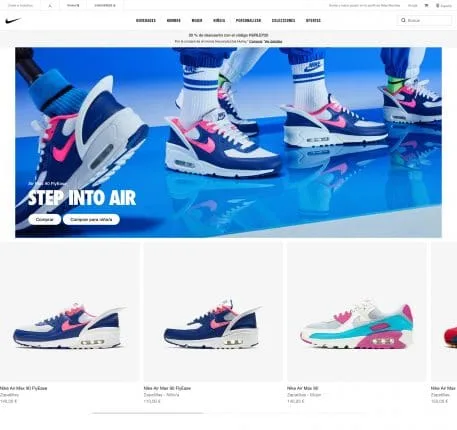
2. An impressive "About Us" page
If a visitor accesses your "About Us" page, it means they're already interested in you, your company, or your product and are giving you the chance to prove that yours is the best. You should clearly explain what your product is, what it does, and most importantly, what it offers customers that sets it apart from the competition—always find that unique selling point that only you offer. Include all testimonials, achievements, and any positive comments from social networks or Instagram photos showing real people using your product.Make sure not to waste this opportunity, as it could win you a customer. Your contact information must be clear and easy to find in your About Us section and throughout your website. Be sure to mention:Contact email Your company address (list either office or tax domicile to build trust) Links to your social media Overloading your "About Us" page with too much information can overwhelm visitors. Some online stores, like seedlipdrink in the example below, opt for a minimalist design to keep info clear and easily digestible. Contact information is generally placed in the footer of a website, and users expect to find it there.Here are some practical tips for creating your "About Us" section:· Include basic business info on the page, such as contact details, address, and social media accounts.
· Avoid cluttering the "About Us" page with excessive information. Keep visitors engaged with a minimalist design.
3. Partner with other brands.
It's not easy for most buyers to hand over their hard-earned money to an unknown company. Build your reputation by showing which companies you collaborate with. They don't have to be the scale of Coca-Cola or Apple, but even small businesses can add credibility to yours and your product.The more partners you have, the better. This is how Amasty showcases their established partnerships: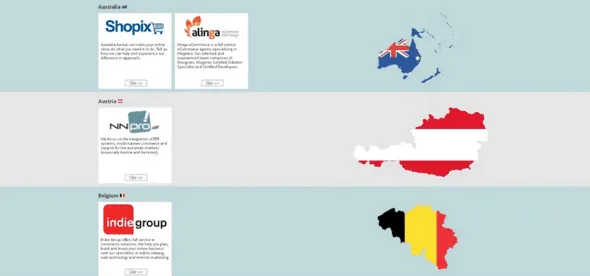 Here are some practical tips for partnering with other brands and influencers:· Highlight affiliated companies on your homepage to instantly show your credibility to anyone visiting your online store.
· If you have many partners, display them all. The more partners you have, the more confidence buyers will have.
4. Provide the best online support
Your customers should know they'll receive assistance after making a purchase if needed. Ensuring post-purchase problem resolution and pre-purchase consultation can turn potential buyers into loyal, repeat customers.The most comprehensive and helpful support type is a 24/7 live chat feature. This tool can increase your site's overall conversion rate by 10% or more. If you lack resources to offer round-the-clock support, you should still provide support during business hours.For example, see how the clothing store GitmanBros offers live chat to their customers: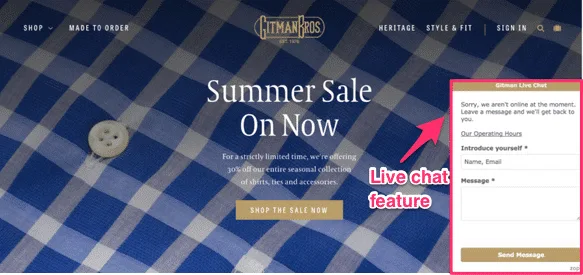 The company keeps the chat function easily accessible but discreet in the bottom left corner.Here are some practical tips for offering excellent online support:
- Provide support at every stage of the shopping experience to encourage new buyers to make their first purchase and returning customers to keep buying.
- Make customer service options, whether a phone line or chat box, visible from the homepage so buyers know these services are available.
5. Provide different payment options
There can be no online store without payment methods. Offer a wide variety of well-known payment options so your customers can easily complete their purchases.PayPal reigns as the primary payment solution, but other valid options exist for your business. Check the Entrepreneur list of 15 other payment methods to see if there's a service that better fits your online business needs. Keep in mind PayPal charges high fees and it might be wise to enable an alternative option alongside it, even though PayPal is the most used and recognized.Here are some helpful tips for providing payment options:- Allow sellers to create accounts in your store and save their payment information to streamline future purchases.
- Offer a wide range of familiar payment methods so every consumer can easily buy from your store.
6. Advertise on social media
Advertising on social media channels is a powerful way to connect creatively and engagingly with many potential customers. Social media advertising can be anything from a simple Facebook post to a Snapchat taco-shaped lens.[ Source ]Use tools like Google Analytics to track which platforms your target customers use most, focusing your marketing efforts there. If the relatively new social media landscape confuses you, check out these guides for advertising on Facebook, Instagram, and Snapchat to get started.Here are some practical tips for social media advertising:- Social media marketing allows for plenty of creativity—try incorporating the personality of your key buyers into your ads.
- Use social media analytics to track ad success and form strategies to improve future promotions.
7. A helpful, SEO-driven blog
Running a blog is a chance to drive more traffic to your shop. Posts containing SEO keywords and useful information for consumers tend to rank higher in search engine results. Well-ranked blog posts that encourage visits are a springboard that guides visitors to product pages where they complete purchases.[ Source ]A blog is also a way to connect with your audience on a deeper level. Seeing how customers respond to your content can inform strategies to meet buyer needs and desires. Blog posts build buyer trust by offering value, such as expert advice on using your product or industry-related topics.Here are some practical tips for creating a shop blog:- Use SEO tools to measure monthly search volume and keyword difficulty. Terms with high search volume and high difficulty will be tougher to rank for.
- Use Google Analytics to track blog post page visits. Note previous posts that garnered lots of visits when planning future content.
8. Build buyer trust with reviews on your site
Product reviews and ratings dramatically boost your company's reliability. Online buyers can't meet sellers in person, so they rely on feedback from other buyers to evaluate new brands and products. Product page reviews save consumers time by quickly showing what others think, building confidence and speeding up conversions.Reviews are most convincing when plentiful. To generate more feedback, don’t hesitate to ask customers for a review after purchase. Satisfied customers often don’t think to leave a review because everything already seems fine. Give a gentle nudge, and they'll probably be happy to share their positive experience.Here are some practical tips for using product reviews:- Display the average rating and review count prominently at the top of each product page (next to the product) and at the bottom with the full review content to increase visibility.
- Encourage reviews by offering buyers a small discount after purchase if they leave feedback.

9. SEO optimization for your eCommerce
Your online store needs traffic for purchases to happen. The key to generating traffic? Search engine optimization. Incorporating SEO keywords in product titles and descriptions makes your online shop more likely to rank higher in search results. Higher visibility is the key ingredient for more site visits and conversions.If you’re unsure how to find SEO-friendly keywords or integrate them into your store, check out this helpful guide on optimizing eCommerce websites for SEO.Here are some practical tips to make your online store SEO-friendly:- Use SEO tools to find keywords with sufficiently high monthly search volumes and low difficulty so your site can rank.
- Write down SEO keywords you’re thinking of adding to product pages to see what results you'll compete with. If major sites dominate, consider choosing a less competitive term.
10. Mobile-first for your online store
Mobile purchases accounted for 30% of online sales last year. This figure is only rising: Business Insider predicts by 2020 mobile shopping will make up 45% of all eCommerce purchases.With growing phone usage for online shopping, merchants must ensure site design supports mobile devices so buyers can shop regardless of device. Tech-savvy sellers can check OS requirements, like these iOS guidelines, to ensure responsiveness. Merchants can also use responsive online store templates pre-configured for mobile friendliness.Here are practical tips to ensure your site is mobile responsive:- Choose vertical layouts over horizontal to make scrolling and viewing easier on phone screens.
- Test your store’s mobile responsiveness by loading it on a phone and navigating to check for issues.
11. Analytics tracking and iteration
Online store owners can’t improve growth strategies without monitoring progress. The best way to track sales activity and customer behavior is to use a tool like Google Analytics. This program provides clear metrics like product sales percentages, page visits, and abandoned cart counts. You can easily set up Analytics for your online store following these instructions.Monitor your sales metrics over time with Analytics to gain insights on how to engage customers better and drive more purchases. Sellers needing help setting up Analytics or interpreting data should consult our guide to using the tool on their online store.Here are practical tips for tracking and iterating seller activity with Google Analytics:- Enable "Enhanced Ecommerce tracking" when setting up Analytics to get a wide range of seller activity insights.
- Create segments in Google Analytics to form data-driven insights on your key buyer groups. Setup instructions are here.
12. Offer free shipping
Thanks to Amazon Prime, free shipping is now an expectation for online shoppers. The added cost of standard shipping can easily deter buyers from completing checkout. Sellers who can afford to provide free shipping should offer it if they don’t already to encourage purchases.While upfront costs of free shipping may hurt initially, many merchants see better returns with increased purchases after offering this policy. To ensure customers notice your generous policy, highlight free shipping prominently in your store, like Thrive Market does on their homepage in the photo above.Here are practical tips to attract buyers with your shipping policy:- Offer free shipping to reduce total item cost for buyers and incentivize purchases.
- Highlight your free shipping offer throughout your online store so buyers stay motivated to shop.
13. Build your outreach list
Growing your business involves more than customers—you also need to reach people in your industry who can help you connect with more buyers in your target audience. Networking with the right groups allows merchants to generate product feedback and extend outreach to connect with as many customers as possible. Sellers should consider reaching out to:- Traditional reporters: Writers for publications specialized in your industry who can create content about your products.
- Industry bloggers: Writers of blogs focused on your industry who showcase products like yours.
- Social media influencers: People commenting on your industry in social media with a large following.
- Like-minded entrepreneurs: Business owners in your industry familiar with your products.
- Use tools like Buzzsumo and Voila Norbert to find industry influencers you can contact.
- Organize outreach prospects by categories like follower count or likelihood of response.
14. Use quick front-end web tools
Users without programming experience can use the content management system chosen for them, like Shopify, BigCommerce, or WooCommerce, to set up their online store. These programs feature an intuitive visual composer, making it easy to customize sections without coding knowledge.Shopify and WooCommerce make it easy for sellers to customize their online store design.Here are practical tips for using your website’s front-end tools:- Ensure your chosen web design aligns with your key buyer personas and brand image. Software like Shopify, WooCommerce, and BigCommerce typically provide recommendations on which business types fit each design best.
15. Watch the competition
Customers browse online stores looking for the lowest prices and best overall shopping experiences. To keep buyers attracted to your store, merchants must identify similar stores to their own as benchmarks. Do these stores offer 60- or 30-day return policies? Free shipping or only paid options? Discovering what makes competitors more appealing helps sellers know what to change to keep loyal customers and attract new buyers.Here are practical tips for evaluating your competition:- Look for products like yours on major marketplaces—not just online stores. Places like Amazon and eBay are excellent indicators of competitive pricing for your products and industry. Use their rates as references for your own pricing to attract more buyers.
- Consider your competitors’ site designs, not just their product offers. Observe what makes their store easier to use and more appealing to shoppers.
16. Use quality photos.
Humans are visual creatures. We process images in 1/10 of a second and understand visual information 60,000 times faster than words. This natural tendency to focus on images means product photos make a strong immediate impression on buyers. Using clear, high-resolution photos highlighting product details is essential to quickly attract shoppers without losing their attention.Show multiple angles of your product with photos so buyers can fully imagine the item and know every detail. Since they can’t see the product in person, buyers will feel more confident buying online if they have a clear visual understanding of the product.Here are practical tips for using high-resolution product photos:- Enable 360-degree photography on product pages so buyers can view the product from every angle.
- Enable zoom functions on product photos so buyers can examine items in greater detail.
17. Offer incentives.
Online store owners don’t have to worry about market rules limiting what they can include on product pages or in buyer communication. Merchants with stores should leverage this control by offering incentives to buyers. Whether a pop-up discount on your store’s homepage or a promotional email about a current sale, sellers should proactively engage buyers with various incentives to encourage purchases.Merchants should use data-driven tools (see tip 11) to segment customers and target incentives to different buyer groups. For example, you could email a discount offer for a first purchase to visitors who viewed product pages but never completed a sale.Here are practical tips for offering incentives:- Use discount pop-ups on your site occasionally, not frequently. Bombarding visitors with pop-ups can annoy them and drive them away.
- Track which coupon codes are used most to identify promotions that drove the most purchases and focus on those in the future.
18. Encourage social media sharing
Organic word-of-mouth marketing on social media can boost your eCommerce business growth. Public discussions about your brand and products on social media channels serve as social proof: the psychological phenomenon where people mimic others’ behavior assuming it’s correct. Online buyers can’t see your products in person, so they consider what other customers say about your business on Facebook to decide whether to buy.Encourage social buzz around your product by starting a campaign to promote sharing. For example, a brand could offer customers a contest entry if they comment on a social media post or tag a friend. Merchants should also encourage social sharing by making their social media channels easily accessible on their site.Here are practical tips to promote social sharing:- Don’t limit social sharing to buyers! Contact partner brands and encourage them to share info about your business or tag your brand in their social media content.
- Keep the sharing chain going. If someone mentions your brand on social media, try to continue engaging with tactics like retweeting or commenting below the post.
19. Leverage email marketing
Email marketing is an easy way for merchants to build relationships with customers. Merchants can send targeted messages to buyer segments addressing specific desires of each group. By appealing to buyers’ interests, email marketing is a powerful tool to boost sales and revenue.To start, you’ll need to collect buyers’ emails and ensure they want to receive your messages. Many opportunities exist to ask buyers if they want email notifications, such as during checkout or via pop-ups while browsing.Not all buyers will subscribe to your email list, but those who do will be an enthusiastic group likely to respond well to your email marketing.Here are practical tips for using email marketing:- Use an email marketing tool like Campaign Monitor to track message success, such as open rates and most-clicked links.
- Monitor which customers unsubscribe from your email list with your email marketing software. Using other buyer profile info, try to infer why and use that knowledge to prevent future cancellations.
20. Offer refund policies and money-back guarantees
Buying a product online with a limited return policy is risky. Customers can’t see the item in person, so they must trust it’s as described. With the possibility the product may not meet standards, most buyers won’t purchase online without a return policy.Sellers can build buyer trust and encourage purchases by offering generous return policies and money-back guarantees. Allowing customers to return an item if they change their mind or if it doesn’t match the product description shows other consumers you trust your buyers and want to provide value.A money-back guarantee is very important. It should give your customers an option if they don’t like the product. It doesn’t mean they’ll necessarily request a refund—some will, of course—but most just want to know a backup option exists. People naturally avoid risk, so this flexible return policy will appeal to them. As a result, you’ll gain more customers than you would without a money-back guarantee.Here are practical tips for return policies and money-back guarantees:- Create a policies page on your site outlining exact terms and conditions for acceptable returns and money-back claims. Your customers will appreciate transparency when trying to understand their orders.
- Consider offering free returns shipping. Providing free returns is an added cost for merchants but fosters brand loyalty with excellent customer service.
Maintain your online store for more conversions
Online stores give merchants full autonomy over customer experiences. Instead of following marketplace policies, a seller can set up their own online shop on their own terms to shape buyer product interactions.Entrepreneurs with this freedom as online store owners can foster more conversions if they know how to create every element of their store. By following the strategies detailed in this guide, merchants become more aware of how customers perceive each store element and apply that knowledge to build their shop. Maintaining an online store aligned with the desires and motivations of key buyers gives sellers an advantage over less aware competitors.We hope these tips have been helpful for building your e-commerce. Now it’s time to decide: if you’re doing it yourself, we can assist with strategy and positioning; if not, and you have the budget, it’s always wise to work from the start with a trusted agency to lay the best foundations—because if the online shop isn’t well designed or developed, generating sales or new leads to keep your product moving smoothly and sales growing week after week will be much harder.Contact us to start your online project!Categories
Knowledge


