


App Design Trends 2026

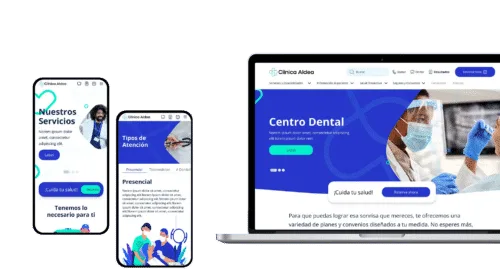
App design is entering a crucial stage. Technology is evolving, and users expect faster, more intuitive, and personalized experiences. For businesses, the challenge is to create products that not only function well but also connect, surprise, and convert. These are the trends that will define 2026.
- Living interfaces: when the UI reacts like a real system
- Integrated AI: from assistant to product brain
- Predictive UX: the app anticipates the next action
- Multisensory design: the experience becomes physical
- Smart accessibility: automatic personalization thanks to AI
- More modular architectures: speed and scalability
- 2026 will bring more human apps
Living interfaces: when the UI reacts like a real system
Interfaces become dynamic and adapt based on user interaction. — Microinteractions designed to guide without distraction. — Motion design that provides clarity, not just aesthetics. — Elements that change according to the flow, minimizing errors. Why it matters: increases comprehension, improves engagement, and reduces friction in key processes (registration, purchase, booking).

Integrated AI: from assistant to product brain
AI is no longer in an isolated module: it now affects the entire product architecture. — Chatbots that understand context, not just questions. — Automations that shorten internal and external processes. — Recommendations based on real user behavior. Direct impact: greater speed, fewer steps, and a more personalized experience from the first use.
Predictive UX: the app anticipates the next action
2026 will be the year when apps start acting before the user. — Smart notifications that appear only when they add value. — Screens that reorganize options based on habits. — Suggestions based on time, location, or detected intent. Result: a shorter path to conversion and a much lower abandonment rate.
Multisensory design: the experience becomes physical
Sensory design is no longer experimental and is entering apps in sectors such as retail, health, banking, and education. — Haptic vibration with nuances depending on the action performed. — Subtle sounds that reinforce confirmations or alerts. — Tactile transitions that generate a sense of security. Benefit: a high-quality feel and greater emotional connection with the product.
Smart accessibility: automatic personalization thanks to AI
Apps automatically adapt so that anyone can use them effortlessly. — Automatic adjustments to contrast, size, and readability. — More accurate assisted reading thanks to language models. — Modes adapted to usage conditions (outdoor, night, low vision). Competitive advantage: increases reach and improves product rating.
More modular architectures: speed and scalability
To incorporate all these trends, apps are built with flexible systems. — Reusable components that can be updated without breaking the system. — Design and development aligned from the start through design systems. — Fast integrations with AI, analytics, and automation APIs. For your business: reduced costs, faster evolution, and more robust products. 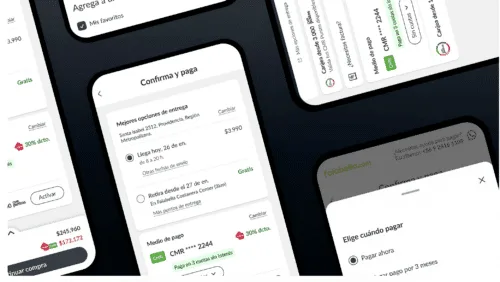
2026 will bring more human apps
2026 apps will be smarter, more responsive, and focused on anticipating needs. Incorporating living interfaces, integrated AI, and predictive UX not only improves the experience: it increases conversions, builds loyalty, and positions your product as a digital benchmark.
Do you want to design an app ready for 2026 trends? We can help you create a product that converts from day one.
Start your audit with usCategories
News


